Most homes in Naples have impact glass. It's a building code reality in Southwest Florida — hurricane-rated windows are standard in new construction and increasingly common in renovations. And one of the first questions homeowners ask once they have impact glass is whether they can add window film to it.
The answer is yes. But the second question — what kind of film — is where most of the misinformation in this market lives. We've walked into homes where the wrong film was installed by another shop and the room was measurably hotter than before the tinting. Not a slight difference. Noticeably hotter.
Here's what's actually happening and why film selection on impact glass isn't the same decision as film selection on standard glass.
How Impact Glass Is Different
Standard residential glass is typically a single layer of annealed or tempered glass. It behaves predictably under heat load — it warms up, and that heat radiates fairly evenly.
Impact glass is a laminated product. Two layers of glass are bonded together with a polyvinyl butyral (PVB) or ionoplast interlayer. This construction is what gives it its hurricane resistance — when the outer pane breaks, the interlayer holds the fragments in place rather than allowing the glass to shatter. It's an engineered system, not just glass.
That laminated construction also means impact glass responds to heat load differently than standard glass. The interlayer and the bonded construction create specific thermal stress considerations that don't apply to standard panes.
The Problem With Ceramic Film on Impact Glass
Ceramic window film has become heavily marketed as a premium product — and for some applications, it is. But the marketing rarely explains how it actually works, and that mechanism creates a specific problem on impact glass.
Ceramic film works primarily by absorbing infrared radiation. The nano-ceramic particles in the film capture infrared heat energy before it passes through the glass into the room. That sounds effective in theory. The problem is what happens to that absorbed heat.
It doesn't disappear. It builds up in the film and glass surface, significantly raising the surface temperature of the window. On standard glass in an automotive application — tempered, relatively small pane, good airflow around the vehicle — this is manageable. On a large laminated impact window in a Southwest Florida home, it creates two serious problems.
First: thermal stress on the window unit. Impact glass is engineered for specific thermal performance parameters. When absorbed heat raises the surface temperature beyond what the laminated construction is designed to handle, it creates thermal stress. The risk is highest on non-tempered glass, where the glass itself has less tolerance for thermal differential across its surface.
Second: the room gets hotter. This is the outcome that surprises homeowners most. Absorbed heat radiates in both directions — outward and inward. When a ceramic film absorbs significant infrared load and builds heat in the glass surface, a meaningful portion of that heat radiates back into the living space. We have seen this happen in Naples homes. The occupants had ceramic film installed expecting a cooler room and found the opposite.
This is not a theoretical risk. It is a real failure mode that results from mismatched film selection on impact glass. Several shops in this market install ceramic film on impact windows by default. We do not.
What the Right Film Does Instead
The correct film for impact glass works by reflection, not absorption.
Sputtered and magnetron-sputtered metallized films use microscopically thin metal layers — typically silver — to reflect infrared radiation back toward its source before it ever enters the glass. The heat never loads into the glass surface. Surface temperature stays controlled. Thermal stress risk is dramatically reduced. And because the infrared is reflected rather than absorbed and re-radiated, the room genuinely gets cooler rather than warmer.
Modern sputtered films achieve this without the mirror-like appearance of older reflective products. Current technology produces films that look natural from both inside and outside while still performing the reflective function that impact glass demands.
This is why we focus on films that are compatible across all glass types — including impact glass — rather than defaulting to the most heavily marketed option.
Why Tempered vs. Non-Tempered Matters
Before we recommend any film for an impact glass home, we evaluate whether the glass is tempered or non-tempered. This is not a step most installers take — but it's the step that determines what options are appropriate.
Tempered glass has greater tolerance for thermal stress. It can handle a wider range of film types with lower risk. Non-tempered impact glass is more sensitive. The thermal differential that a given film creates has a more significant effect on non-tempered glass, which narrows the appropriate film selection.
We don't present film options before completing this evaluation. Film that performs acceptably on tempered impact glass may create genuine risk on non-tempered glass in the same home.
The Triple Silver Low-E Consideration
Some impact glass is manufactured with a Low-E coating already applied — typically on an interior surface of the glass. Low-E coatings are designed to reduce radiant heat transfer and improve the insulating performance of the glass unit.
Triple silver Low-E is a high-performance variant of this coating. It uses three layers of silver to achieve aggressive heat rejection and is found in premium impact glass products.
When triple silver Low-E is present on non-tempered, non-insulated impact glass, film compatibility requires particular attention. The glass already has a reflective coating managing heat load. Adding film introduces additional thermal dynamics to a unit that wasn't designed to accommodate them. This is one of the more nuanced evaluations we make during a consultation — it's not a blanket prohibition, but it requires careful film selection and a thorough assessment of the specific glass.
If you have impact glass with a manufacturer's Low-E coating, tell us. It changes the evaluation.
The Warranty Reality
There is one thing we tell every homeowner considering window film on impact glass, and we tell them before the estimate rather than after:
Adding window film will void your impact glass manufacturer's warranty. We believe this should be disclosed clearly and early — before you decide, not after you've signed.
This is standard across the industry. Glass manufacturers engineer their products to specific performance parameters. Applying film changes those parameters, and manufacturers exclude film-related modifications from their warranty coverage. This applies regardless of who installs the film or what film is used.
The film itself carries its own manufacturer's warranty, which covers the film's performance, adhesion, and appearance. But the glass warranty is a separate matter and homeowners should make their decision with full information.
What a Proper Consultation Looks Like
A consultation for impact glass film at Naples Tint Company includes the following before any film is selected or quoted:
Glass type evaluation — we assess whether the glass is tempered or non-tempered, as this determines what film options are appropriate.
Coating check — we identify whether a manufacturer's Low-E or other coating is present, which affects film compatibility.
Exposure assessment — west and south-facing glass in Naples carries significantly higher solar load than north-facing glass. This affects what heat rejection level is appropriate for each elevation of the home.
Film selection based on findings — we present options matched to the specific glass, not a default recommendation from a price list.
We don't select a film before seeing the glass. The glass determines the options.
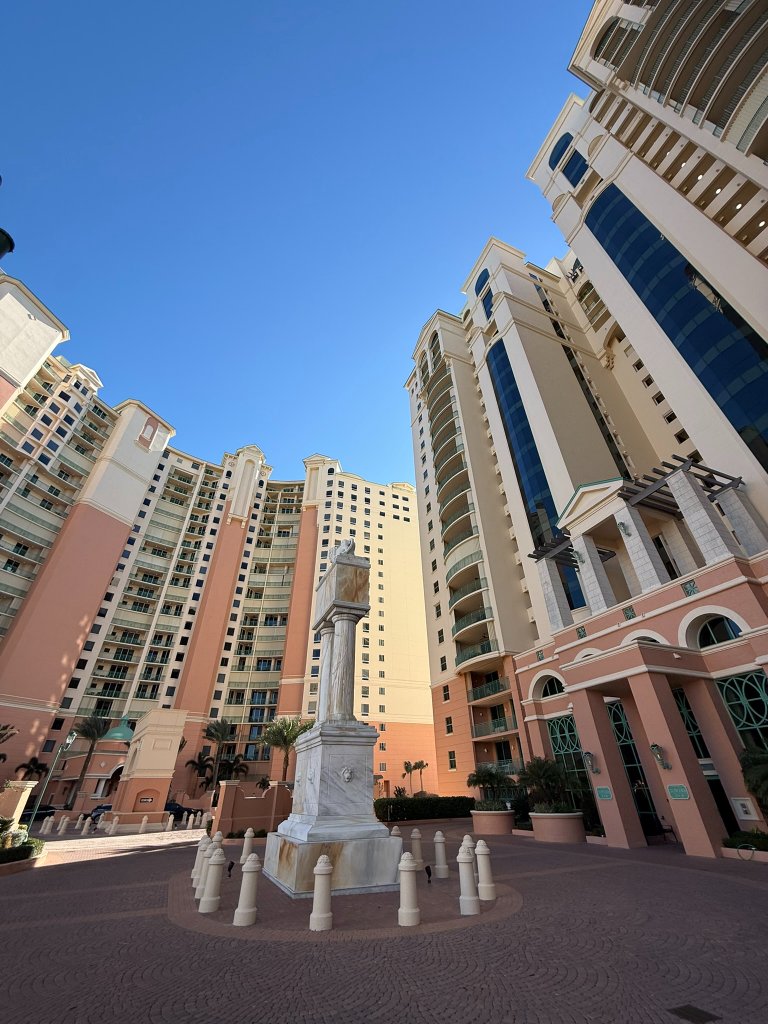
The consequences of getting this wrong are measurable and documented. In one Naples case, ceramic film installed by another company on impact glass in a Gulf-front condo at Baypointe made the room 3 degrees hotter rather than cooler — the absorbed heat radiating back into the living space faster than the air conditioning could remove it. We documented the failure and the correct solution using FLIR thermal imaging. See the full Baypointe case study — including the thermal image that proved V-Kool VK70 was the right film where ceramic had failed.
Frequently Asked Questions
Can you put window film on impact glass?
Yes. Window film can be applied to impact glass, but film selection is critical. Films that work by absorbing infrared heat can raise surface temperatures on impact glass and cause thermal stress — and in some cases make rooms hotter rather than cooler. Sputtered reflective films that work by reflecting heat rather than absorbing it are the appropriate choice for impact glass applications.
Will window film void my impact glass warranty?
Yes. Adding window film voids the glass manufacturer's warranty. This applies regardless of film type or installer. The film carries its own manufacturer's warranty covering the film's performance and appearance, but this is separate from the glass warranty. We disclose this before the estimate, not after.
Why would a room get hotter after tinting?
This happens when a film that works by absorption — ceramic film being the most common example — is installed on impact glass. The absorbed heat builds in the glass surface and radiates in both directions, including back into the room. We have witnessed this in Naples homes. It results from mismatched film selection, not from window film in general.
Do you install ceramic film on impact glass?
We do not recommend ceramic film for impact glass applications. Ceramic film's absorption-based heat rejection mechanism is poorly matched to the thermal stress sensitivity of laminated impact glass. We focus on sputtered reflective films that are compatible with impact glass and do not create surface temperature spikes.
Does it matter whether my impact glass is tempered or not?
Yes, significantly. Non-tempered glass is more sensitive to thermal stress, which narrows the appropriate film selection. We evaluate this during every consultation before presenting options. Film appropriate for tempered impact glass may not be appropriate for non-tempered glass in the same home.
What if my impact glass has a Low-E coating?
Tell us. Low-E coatings — especially triple silver Low-E on non-tempered, non-insulated glass — require careful evaluation before film is selected. It doesn't necessarily mean film can't be installed, but it changes the assessment significantly.
How do I know what kind of impact glass I have?
Check your original window documentation or the glass manufacturer's sticker, which is typically on the spacer bar between panes or on the glass edge. If that information isn't available, we can often identify the glass type during a consultation visit. Curious how film actually bonds to the glass in the first place? See our guide on how window film sticks to glass.
The consequences of getting film selection wrong on impact glass are measurable and documented. In one Naples case, ceramic film installed by another company on Gulf-front impact glass at Baypointe condominiums made the room 3 degrees hotter rather than cooler — the absorbed heat radiating back into the living space faster than the air conditioning could remove it. We documented the failure and the correct solution using FLIR thermal imaging. See the full Baypointe case study — including the thermal image that proved V-Kool VK70 was the right film where ceramic had failed.